
When Saint Botolph was Stained-Glass Row
Written by Dan d’Heilly and Irwin Levy, Friends of Titus Sparrow Park Board Member
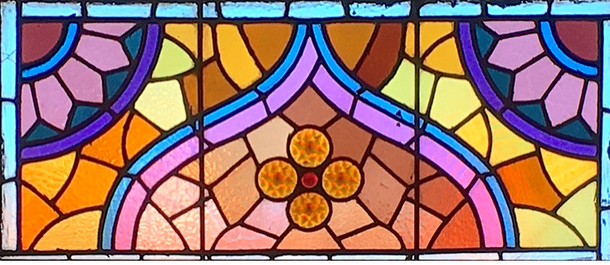
The Saint Botolph Neighborhood Association (SBNA) hosts a First Tuesday Monthly Meet-Up for our community — and that’s where I first met Dan d’Heilly. Over conversation, Dan shared his research on the remarkable stained-glass history of St. Botolph and mentioned that in the late 19th and early 20th centuries, this neighborhood was actually known as Stained Glass Row. I was shocked — how had I lived here without knowing this?
So why was stained glass so prominent in St. Botolph?
Dan explained that by 1880, the Arts & Crafts Movement was sweeping the country, celebrating high-quality craftsmanship — woodcarving, stone carving, and especially stained glass — over newly popular mass-produced industrial goods. That trend aligned perfectly with two major local developments:
The growth of the St. Botolph neighborhood from 1880–1900, as Back Bay expanded west from Copley Square toward Massachusetts Avenue
The area becoming the nation’s first Arts & Crafts hub following a groundbreaking 1897 show at the Museum of Fine Arts — then located in Copley Square where the Copley Square Hotel stands today
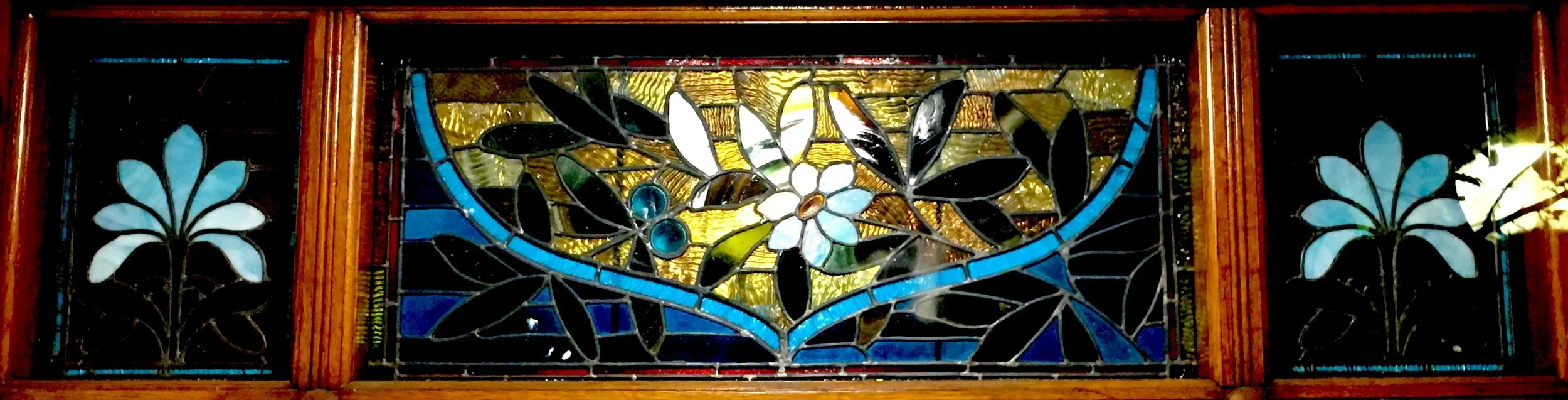
A Center of Stained-Glass Craftsmanship
From 1913 through the late 1990s, the neighborhood was home to tens of thousands of stained-glass windows produced by local studios.
One of the most influential was Charles J. Connick Associates. Connick opened his workshop in 1913 in the Arts & Crafts guild space at 9 Harcourt Street — right here in St. Botolph. His studio produced over 15,000 stained-glass windows for sacred and public spaces worldwide. His renowned works include:
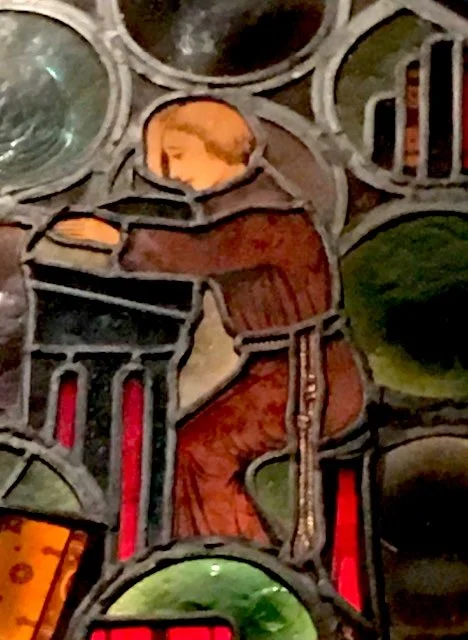
Rose windows at St. Patrick’s Cathedral and St. John the Divine in New York City
Windows at the American Church in Paris
A large collection in the Heinz Memorial Chapel at the University of Pittsburgh
The New York Times called Connick “the world’s greatest contemporary stained-glass craftsman” when he passed in 1946.
Just twenty years later, another major studio — John Terrence O’Duggan Studio — opened only four blocks away at 116 St. Botolph Street. Together with Tiffany and LaFarge, Connick and O’Duggan helped define American stained glass in the 20th century.
Discovering the Art in Our Own Neighborhood
Earlier this year, Dan invited me on a walking tour through St. Botolph, complete with laminated notes he’s created from his research. He pointed out over-door windows in entryways, transoms above bay windows, and unique artistic features embedded into facades.
A survey by SBNA found that around 200 stained-glass windows still decorate buildings in this compact 12-block neighborhood.
Many of the original studio buildings can still be spotted:
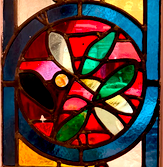
The Connick studio on Harcourt Street — unmarked, but still recognizable, including its tall roof extension where large church windows were proofed in natural light
The O’Duggan staging area visible on the fourth floor at 116 St. Botolph Street
Dan also explained that real estate developers often left a distinctive stained-glass signature on their properties — repeating a motif across multiple townhomes. Once you know to look, the patterns appear everywhere. Groups of four to seven townhouses often share patterns and architectural features.
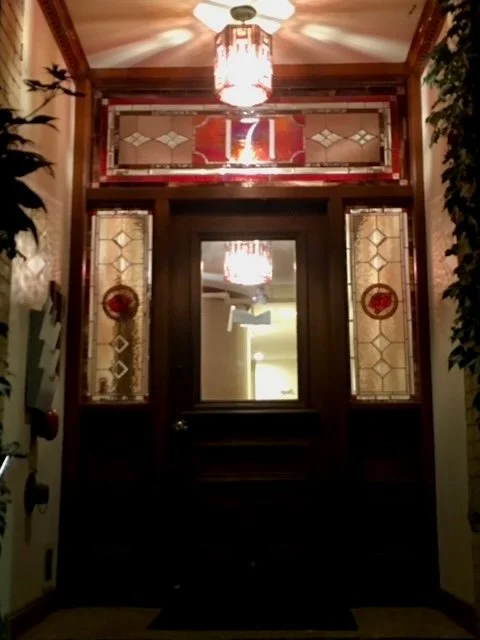
One standout example is 124–132 St. Botolph Street, where the same beautiful window design appears by every front door. St. Botolph Street — especially near Mass Ave — and parts of West Newton and Durham Streets feature some of the neighborhood’s finest examples. Dan’s top picks include:
199 & 171 St. Botolph St.
233, 239 & 243 West Newton St.
Want to see them yourself?
Join us for a special Stained Glass Walking Tour Led by Dan d’Heilly to experience these remarkable windows at dusk, illuminated from within as the neighborhood transforms into the Stained-Glass Row of its past.
📅 Veterans Day — Tuesday, November 11
⏰ 4:00–5:00 PM
📍 Meet at the Southwest Corridor at Harcourt Street
✅ RSVP here
