
Reflections: The South End in the 1960s and '70s with Ken Kruckemeyer
Interviewed by Irwin Levy, Friends of Titus Sparrow Park Board Member
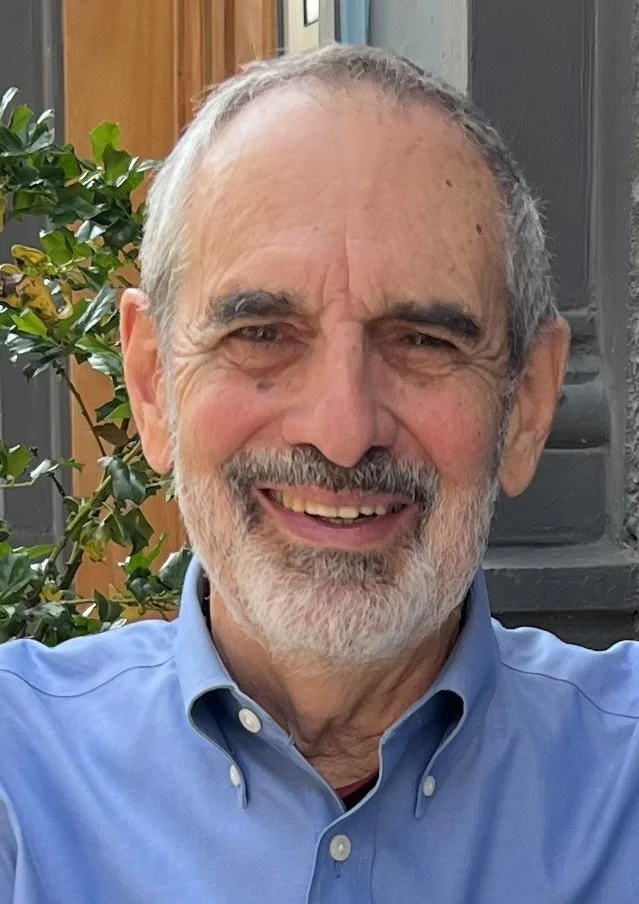
In this Community Corner, I profile longtime South End resident and community leader Ken Kruckemeyer, whose passion for neighborhood advocacy and community planning has helped shape the South End for nearly six decades. Through his leadership in stopping the South End Bypass and helping design the Southwest Corridor, Ken has worked tirelessly to preserve the neighborhood's character while creating vibrant public spaces that continue to bring neighbors together today.
With 59 years and counting in the South End, suffice it to say Ken Kruckemeyer has not just seen the South End's evolution, but was deeply involved in it.
Finding the South End
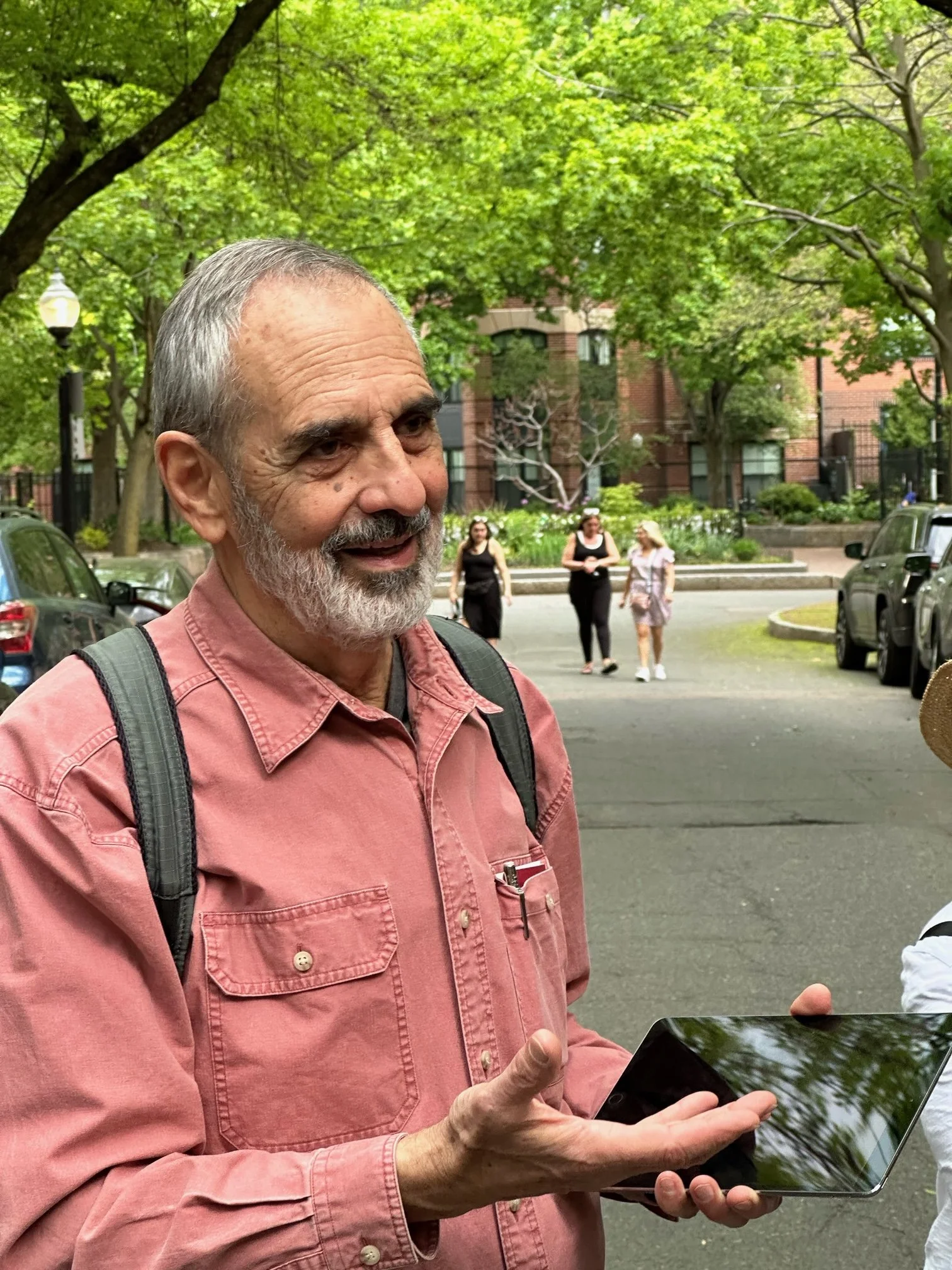
After graduating from MIT in 1965 with a degree in architecture, Ken started his career in Harvard Square. He and his wife, Ann, moved to the north slope of Beacon Hill, where housing was less expensive, parking their Corvair in a vacant lot cleared for urban renewal in the West End. Within a half-year, with the draft breathing down his neck, the offer of a job designing science laboratories at the University of Rochester provided an occupational deferment from the Vietnam War.
Ken and Ann watched many of their contemporaries move to the "desirable" western suburbs.
"Wellesley, Lexington, Newton. If we'd grown up in the Boston suburbs, we would have been taught not to go into Boston and, if you did, never go into the South End. But the suburbs weren't for us. We grew up in the Cincinnati suburbs. My high school had Black kids, Catholics, Jewish kids, and a lot of Protestants. We hadn't been taught to be afraid of people."
Ken's background in architecture allowed him to appreciate the quality of the area's housing stock.
"South End buildings have good bones. Ours was a mess. As a young architect, I was ready to put theory into practice. I'm still working on that."
Learning from the Neighborhood
Ken regaled me with stories of his neighbors.
"There was Mrs. Holder, who owned the lodging house across the street. Her son was in business with the Celtics' Bill Russell. Virginia Robinson lived on Braddock Park with her two daughters, Katherine and Lillian. They knew and had worked with Harriet Tubman! Our daughter was also named Katherine. We referred to the two of them as the namesake neighbors."
Ken's house is within the Cosmopolitan Neighborhood Association.
"Cosmopolitan was composed almost entirely of Black women. But they went by the book and needed a man as president. Inevitably, one of the husbands would be elected, but not really participate. I learned so much from these women. In 1905, a Black woman had bought the Harriet Tubman House on Holyoke Street to create the settlement house there."
Stopping the South End Bypass
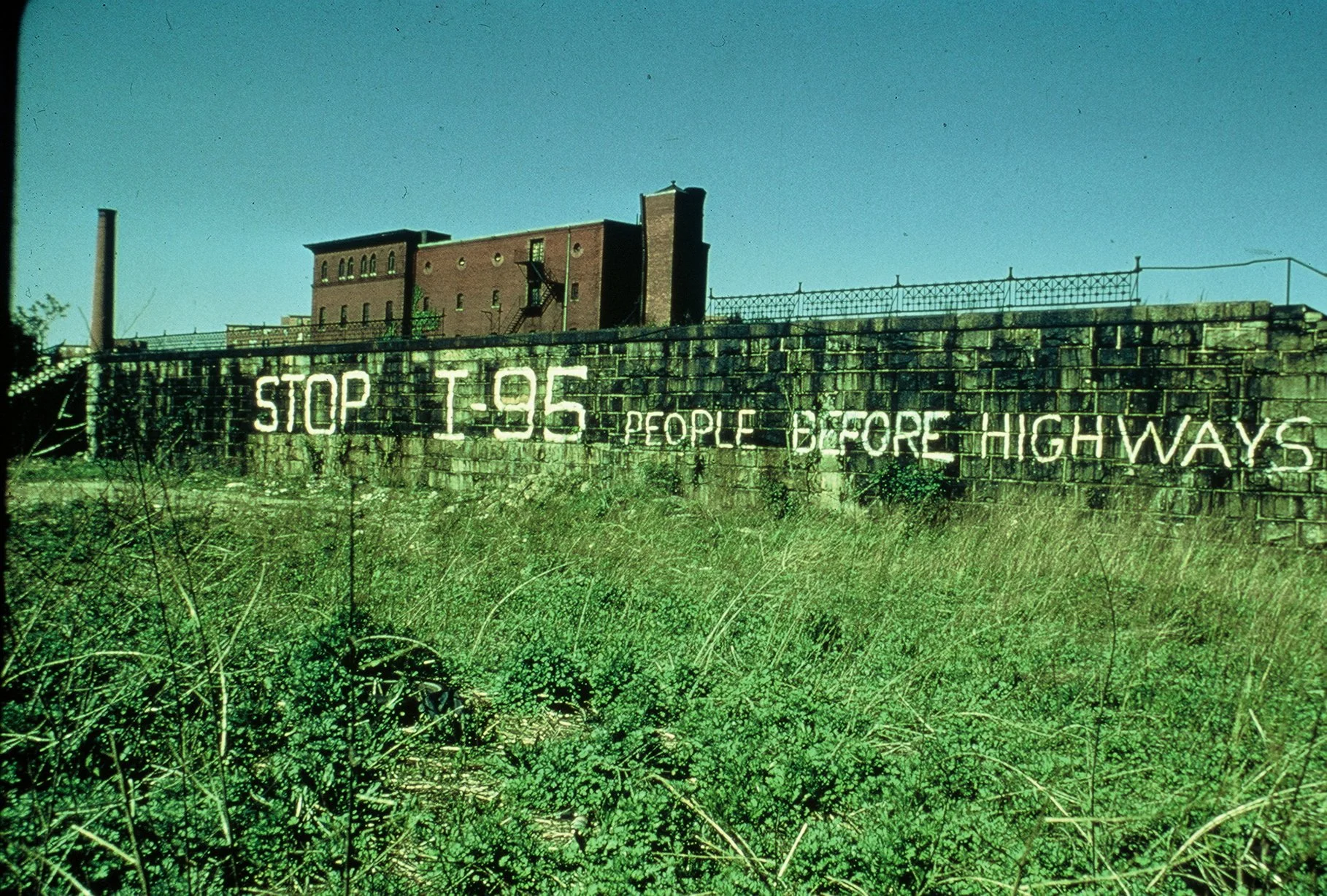
Ken Kruckemeyer's commitment to his neighbors is exemplified by his tireless and ultimately successful efforts to prevent the South End Bypass.
In the late 1960s, a multi-lane expressway was proposed on the present-day Southwest Corridor. (People Before Highways by Karilyn Crockett is the defining work on this subject.)
Ken explained, "How do you energize a community? By having an emergency."
"We discovered that the South End Bypass, shown on the BRA's urban renewal map to require demolishing two houses on each side of each street, was actually going to level seven properties. That's a third of the block!"
Between community opposition and massive lobbying efforts, first Mayor Kevin White stopped the South End Bypass, and then Governor Francis Sargent proclaimed "No Highway" for the Southwest Corridor and Inner Belt in 1972.
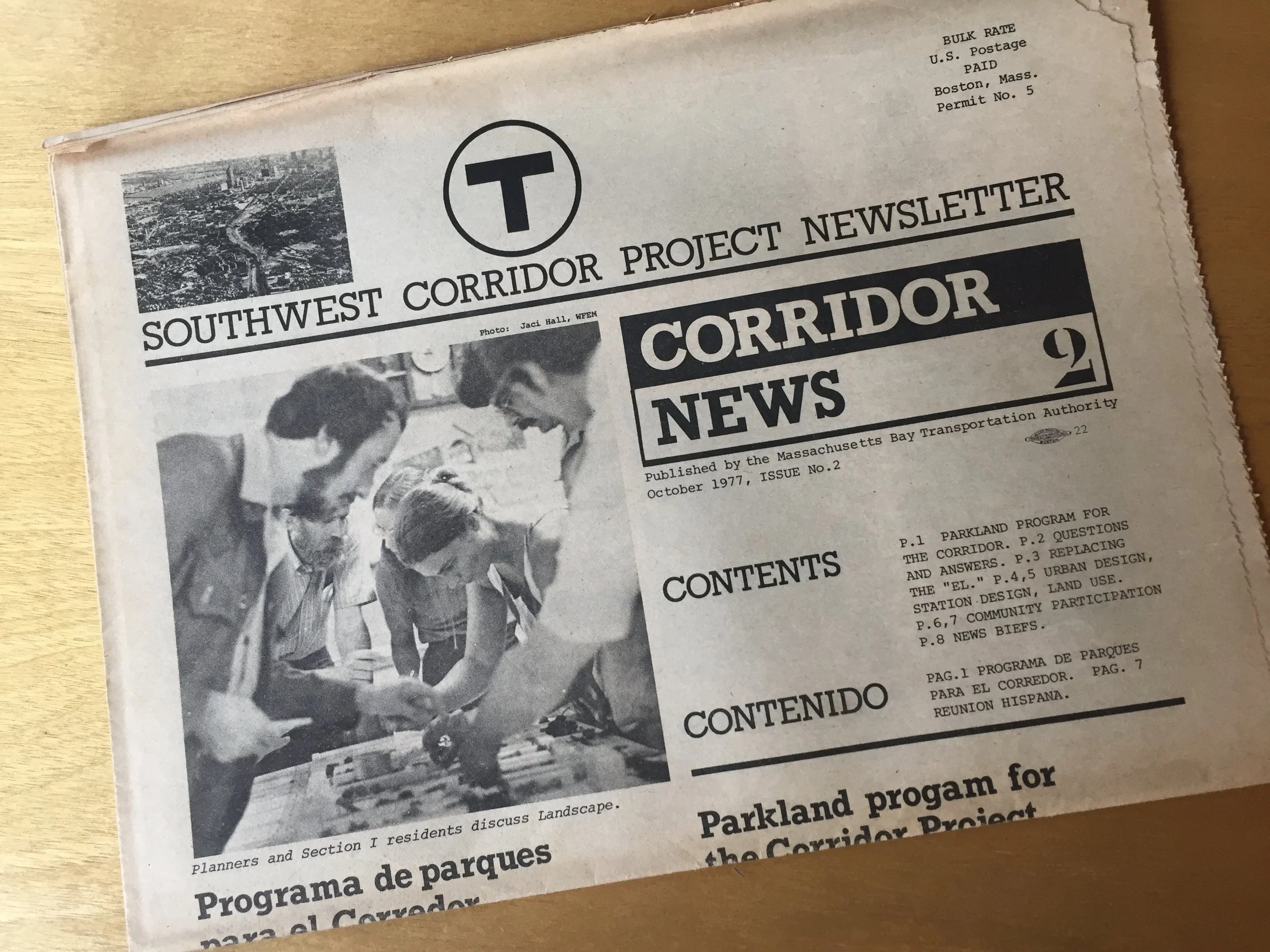
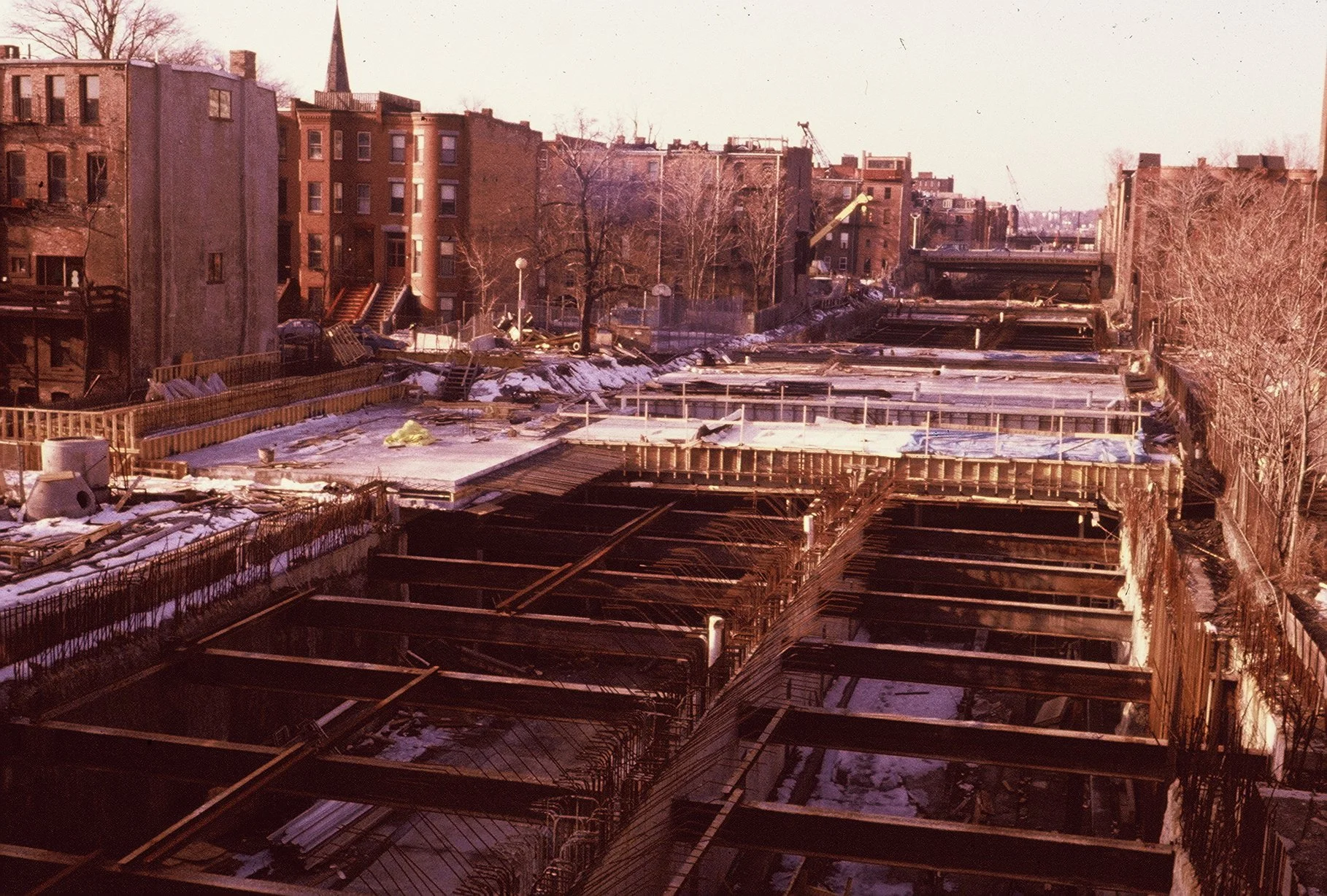
Following the success of stopping the highways, Ken began working to put the Corridor's cleared land back into productive use. Working for Southwest Corridor Development Coordinator Tony Pangaro, Ken became the project manager for the design of the Southwest Corridor, working for the Commonwealth and funded through the MBTA.
"It felt at the time that we changed the way public bureaucracy worked. We had an opportunity to reimagine the Corridor, to make it a place of positive energy for the city. A vibrant public space that brings neighbors together."
Why Some Streets Are Gated
That sentiment led to a source of curiosity that exists to the present day: Why are some of the streets running north of the Southwest Corridor in Saint Botolph gated (Albemarle, Blackwood, and Cumberland), while others are not (Durham, Follen, and Harcourt)?
Every detail of the Corridor, the stations, and the parkland was determined through a rigorous process of community participation.
"You had to be in the room—the state, the city, the agencies, the engineers, the neighbors. Decisions were made by consensus."
Ken explained, "We knew there were divisions between folks who wanted to get to the new park that would be built over the railroad, and we knew that some were afraid of access to the park. We began that discussion by saying, 'If there is currently a bridge over the railroad, we'll keep access to the park and the connection between the neighborhoods. Where there is no bridge, it stays closed unless those streets agree to access.'"
"The vision for Blackwood and Cumberland was not for the wall that exists today. Rather, it was for a steel fence that could be unbolted to provide access to the Corridor at a time in the future if neighbors agreed to it. I still don't know why they built a wall instead."
Looking Back
I asked Ken, looking back over his almost 60 years in the South End, what made him believe so much in this neighborhood, especially during a time when many did not.
"The people who were already here, some for generations. I learned so much from them. Florence Moore and Ena Harris of Braddock Park, and the other strong Black women in this community I mentioned earlier. And men like Chuck Turner, Mel King, Bob Fortes, who later became a state representative from Mattapan, Isaac Graves, Ted Parish, and Marion MacElheney."
The South End, as Ken Kruckemeyer sees it, has always been a place defined not just by change, but by connection—by the voices, struggles, and strength of its people.
After nearly 60 years, his reflections underscore a simple truth: the neighborhood's history lives on through those who have shaped it, and those who continue to carry it forward.
Ken Kruckemeyer helped shape the South End through thoughtful leadership, civic engagement, and a deep belief in the power of community. His legacy lives on not only in the Southwest Corridor, but in the generations of neighbors who continue to benefit from his work.
Thank you for reading Community Corner. More stories highlighting the people who make the South End and St. Botolph such a special community are coming soon.
— Irwin Levy, Board Member, Friends of Titus Sparrow Park

