Interviewed by Irwin Levy, Friends of Titus Sparrow Park Board Member

In this Community Corner, I profile Dan d’Heilly, Saint Botolph’s unofficial historian and a longtime neighborhood resident. Dan’s curiosity about the area’s stained-glass history led him down a path of discovery, uncovering stories that connect Saint Botolph to Boston’s rich artistic, cultural, and industrial past. Since moving to the neighborhood in 1997, Dan has made it his mission to share these stories and help bring the history of Saint Botolph to life for his fellow neighbors.
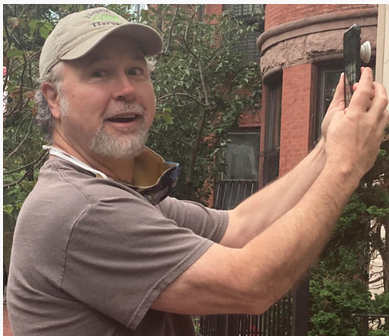
Dan d’Heilly has lived in Saint Botolph since 1997, arriving in time to see the last several Saint Botolph Street Fairs. “They were great!” he said.
When I asked Dan how he came to this role as Saint Botolph’s unofficial historian, the answer came quickly. “Claire Dargan, Saint Botolph Neighborhood Association (SBNA) Membership Director, used to tell people that Saint Botolph was famous for stained glass. I would ask her, ‘What do you mean?’ and she would tell me to look it up. Eventually, I did!”
From the West Coast to New England
Dan was born on the West Coast and grew up in California, Alaska, and Washington. He earned a B.A. in History from Seattle University, then came to New England for work and adventure, but stayed for the history, and for his wife June.
Dan earned an MBA at Babson College in 1994, the year they were voted #1 in Entrepreneurship by U.S. News & World Report. Dan was at Babson for seven years, where he published, helped create the college’s first Internet sites, and taught Business Plan classes.
The website and a best-selling textbook, The Portable MBA in Entrepreneurship Case Studies, were his proudest accomplishments, but there was another one. A paper from Dan’s class won the Babson Business Plan Prize in 1999. It was written by a student team led by Jamie Siminoff. Today, Jamie is famous for appearing on ABC’s Shark Tank before becoming the billionaire founder of Ring Video Doorbell.
A Career That Took Some Unexpected Turns
Dan had a wide-ranging career with business plan consulting, Internet, and marketing engagements in dozens of industries. The most unusual was developing a business plan for a tree service company and becoming Massachusetts Certified Arborist #2348 in the process.
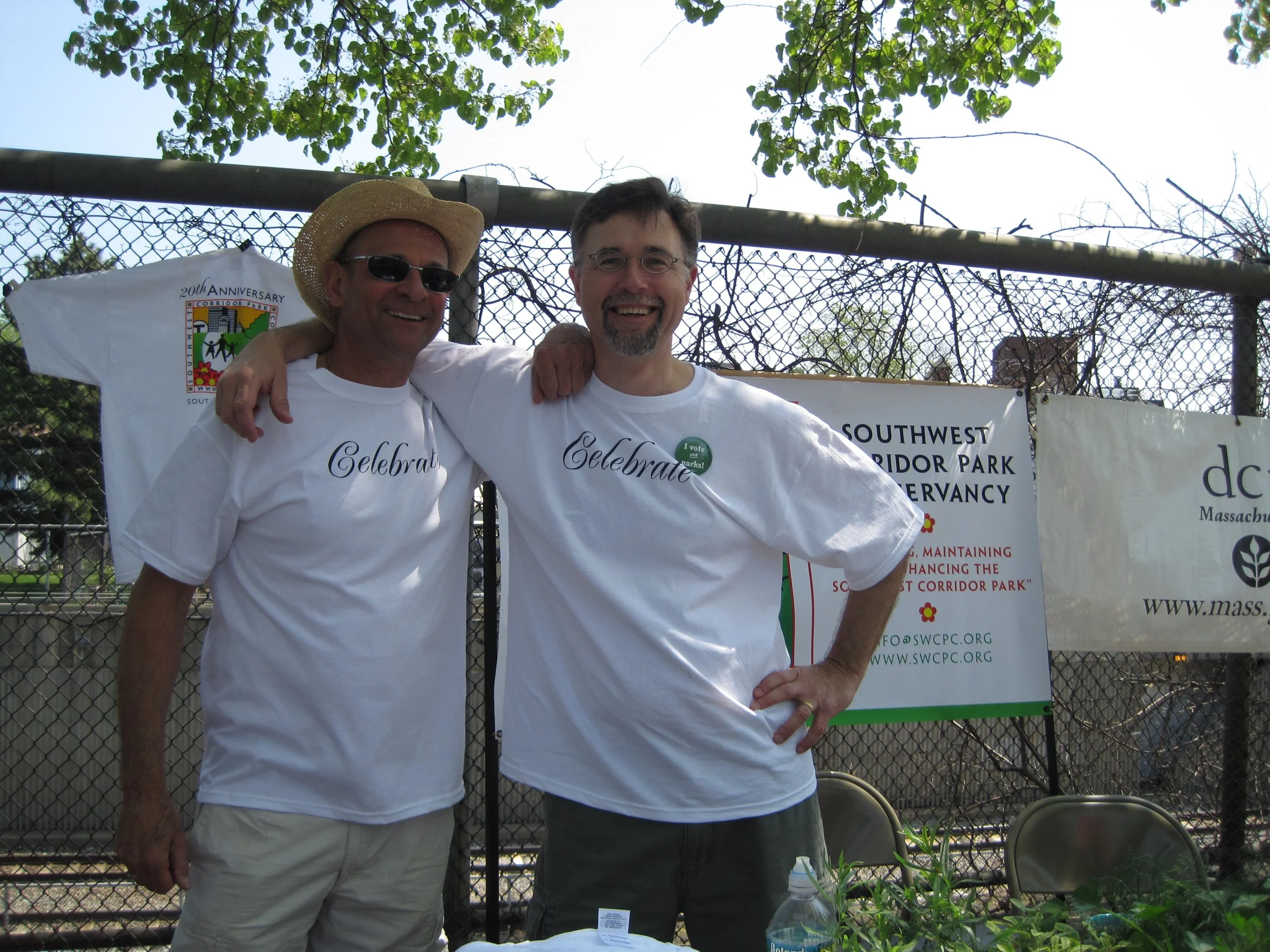
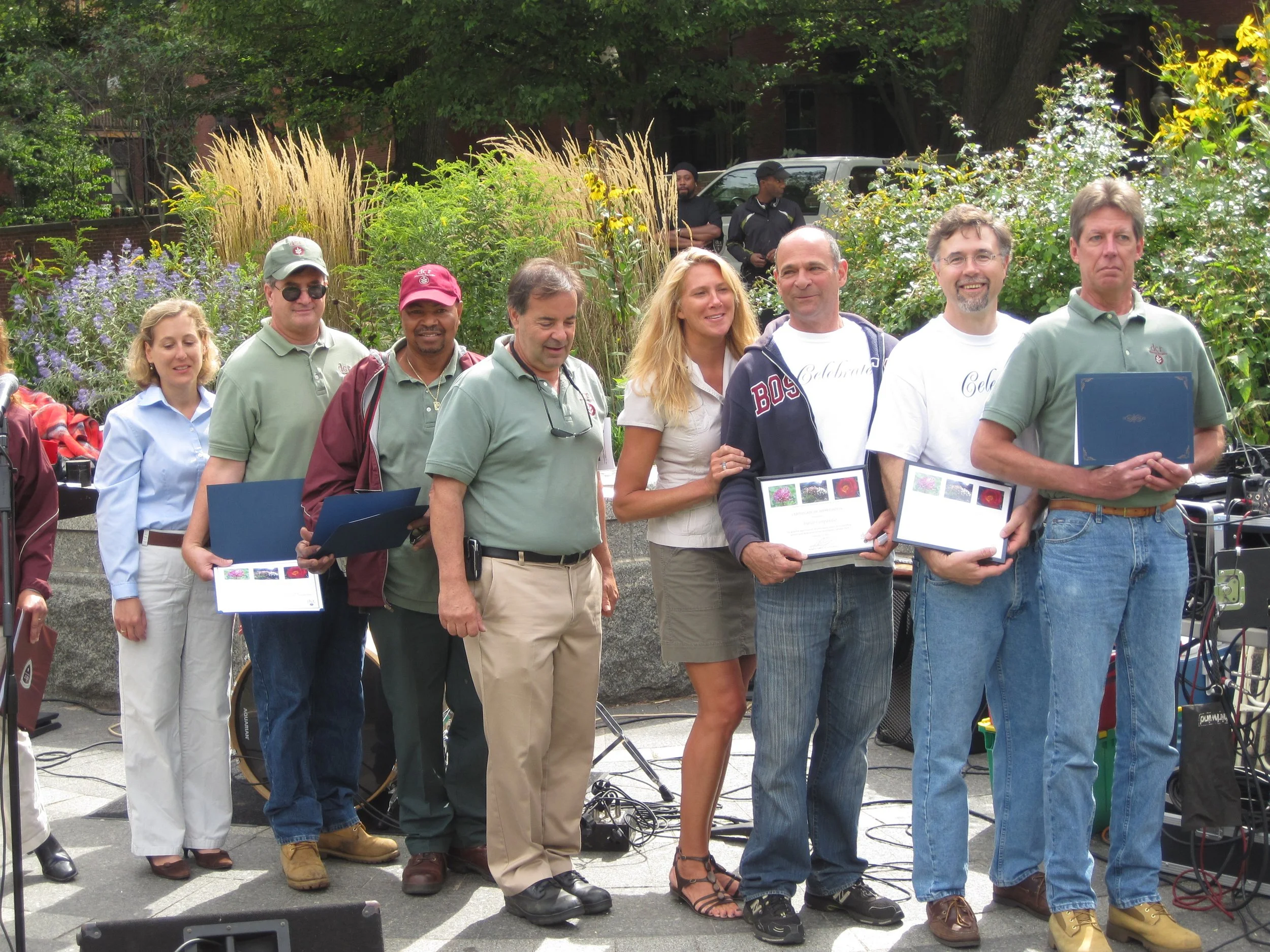
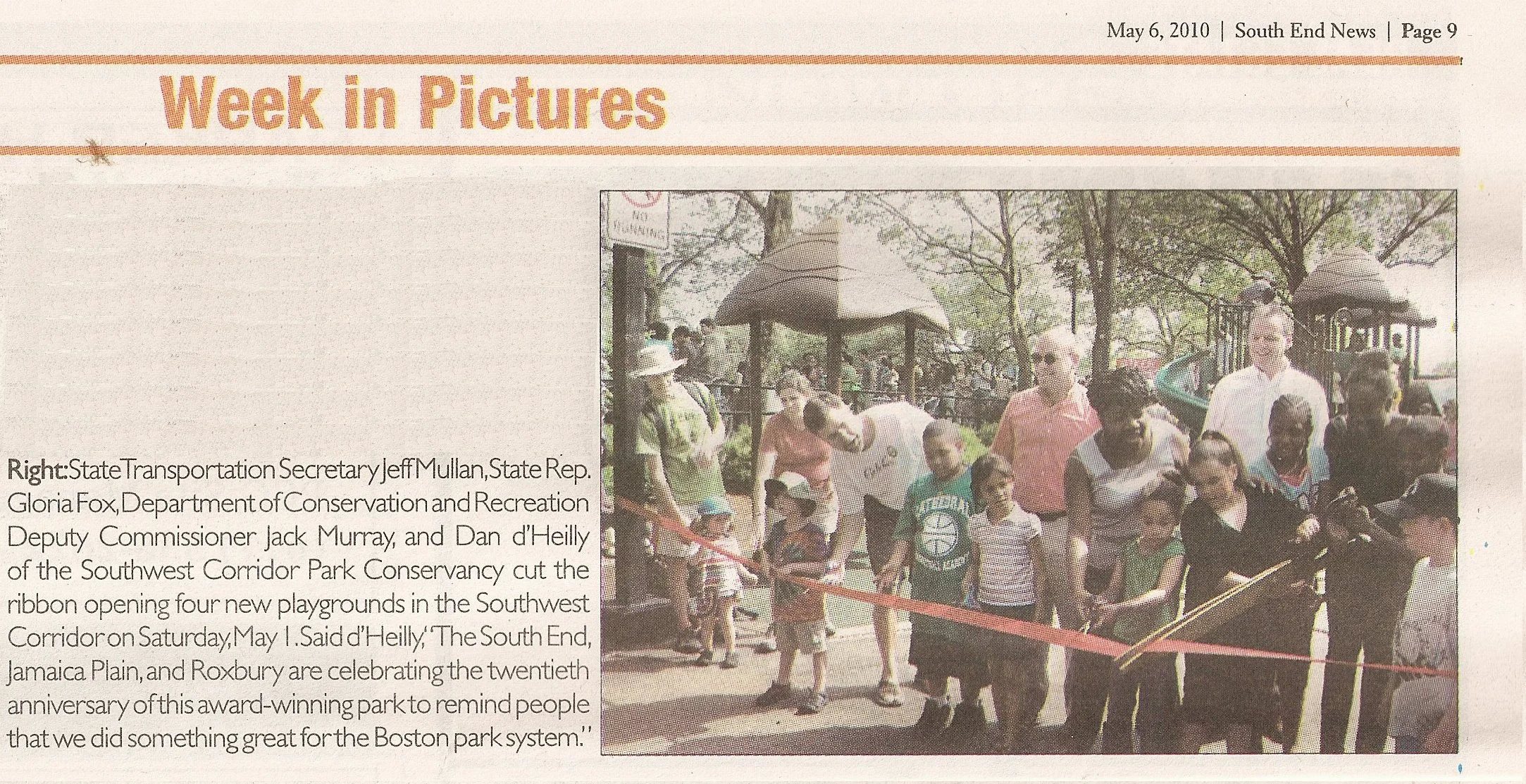
This was a key reason Dan was asked to join the Southwest Corridor Park (SWCP) board in 2008, but his tenure is best remembered for organizing and marketing the 20th anniversary park celebration, which was held at Titus Sparrow Park on May 10, 2010.
According to DCR Area Director Karl Pastore, the corridor budget increased by $2.3 million as a direct result of the SWCP Conservancy efforts.
Discovering Saint Botolph’s Stained-Glass History
Dan dug into Saint Botolph’s stained-glass past like a case study, and he found it full of history.
This area was known nationwide for 20th-century stained-glass church windows. The Saint Botolph neighborhood was also at the center of the Society of Arts and Crafts (SAC) struggle between Louis Comfort Tiffany and Charles Connick Jr. (Connick was elected Stained Glass Association of America president five years before Tiffany died.)
The Boston Public Library and the MIT Library both have collections related to Saint Botolph stained glass.
Dan learned that the New York Times called Saint Botolph “Stained Glass Row,” so he created a stained-glass walking tour for interested friends and shared the history online in 2021.
You can explore these pages on the Stained Glass Row website and the Saint Botolph Neighborhood Association (SBNA) website.
A Neighborhood Full of Stories
Later, Dan and Claire created a slideshow of Saint Botolph history for an SBNA meeting, based on the 1981 Boston Landmarks Report. Neighbors loved the presentation, but Dan and Claire agreed to update the slideshow with more sources for a future meeting.
Dan and his fellow local historians and Saint Botolph neighbors, most notably June d’Heilly, Claire Dargan, Lee Steele, and Ian MacKenzie, but others too, poked around local history, and more stories emerged.
They soon realized that this seemingly unremarkable eight-block neighborhood was in the middle of important Industrial Revolution, Arts, Education, Sports, Jazz, Race Relations, Crime, and Urban Renewal stories too!
Saint Botolph was the unheralded geographic center of Boston history from about 1830 to 1914, with faint ripples continuing through the 1960s, when the Prudential Mall was built, until 1983, when the Copley Mall and urban renewal demolition dispersed the remaining studios and artists-in-residence.
Dan pointed out that the neighborhood was squeezed between the Penn Central tracks (currently the Southwest Corridor) and the Boston and Albany Railroad Yards (now the Prudential Center).
“So, Saint Botolph was on the wrong side of the tracks, twice!”
Fortunately, it was on the right side of both tracks when developed between 1881 and 1903. Irvington Street (now under Copley Mall) was just one block from Dartmouth Street, so it flourished during Copley Square and Huntington Avenue boom times.
That era faded with WWI, and it sank much further amidst the South End’s ongoing decline. As Dan said, “Saint Botolph was often depressed, distressed, oppressed, and abused during those years.”
From Urban Renewal to a New Era of Community
Yet this little neighborhood endured.
Ironically, urban renewal ended 80-plus years of an obscure, significant Arts & Crafts colony here, but it also ushered in a new era of community, development, and civic pride in this two-block-by-eight-block neighborhood.
By 1981, both railroad tracks and rail yards were buried, and Saint Botolph had become one of ten historic districts in the city of Boston.
Bringing Saint Botolph’s History to Life
While Dan was working on the updated slideshow, we worked out a plan for a Stained Glass Row walking tour, a collaborative event between the Friends of Titus Sparrow Park and the SBNA that Dan led last year on a cold November Veterans Day at dusk.
The tour coincided with a Neighborhood Stories article, published in our November 2025 Community Corner newsletter: When Saint Botolph Was Stained Glass Row.
Dan and his group of local historians are currently at work to bring more hyper-local Saint Botolph stories to light in a series the SBNA calls Saint’s Alive.
SBNA produced the first session as a community presentation on May 18, 2026, at The Greenhouse on Huntington Avenue. The topic was Saint Botolph stained glass from 1881 to 1983.
Another informal lecture and more stained-glass walking tours are in the planning stages.
Dan d’Heilly is helping preserve Saint Botolph’s rich history through research, storytelling, walking tours, and community presentations. Alongside fellow local historians and neighbors, he is bringing the stories of the neighborhood to life and ensuring its history remains an important part of its future.
Thank you for reading Community Corner. More stories highlighting the people who make the South End and St. Botolph such a special community are coming soon.
— Irwin Levy, Board Member, Friends of Titus Sparrow Park